METE
The Autonomous Storm Response Specialist
Precision-engineered UAV systems designed for autonomous mission execution
Technical Overview
METE is a high-performance unmanned aerial system (UAS) specifically optimized for the SUAS 2026 'Storm Response' mission profile. Featuring advanced composite materials, redundant avionics architecture, and precision payload delivery mechanisms, METE represents the culmination of rigorous engineering analysis and innovative design solutions.
Technical Specifications
Max Takeoff Weight
< 35 lbs
Optimized for Rapid Response
Wingspan
2.202 m
Optimized Aspect Ratio
Powerplant
High-Efficiency Brushless Electric Jet Motor - EDF (Electric Ducted Fan)
20 minutes (full payload)
Autopilot
Pixhawk Suite with Custom ArduPilot Configuration
Advanced Navigation
Communication
915MHz Telemetry / 2.4GHz Control Link
Redundant Systems
Performance
Max Speed: 120 km/h
Cruise Speed: 45 km/h
Thrust-to-Weight Ratio: 2.1:1
| Parameter | Value | Notes |
|---|---|---|
| Max Takeoff Weight | < 35 lbs | Competition Compliant |
| Wingspan | 2.202 m | High Aspect Ratio Design |
| Flight Endurance | 20 minutes (full payload) | Full Mission Capable |
| Payload Capacity | 2.5 kg | Including Camera & Payload |
| Service Ceiling | 0-120 m AGL | Above Ground Level |
| Thrust-to-Weight Ratio | 2.1:1 | Excellent Climb Rate |
Design Rationale & Sub-systems
Aerodynamic Design
Wing & Tail Configuration: METE S-1 features a high-performance fixed-wing and V-tail aerodynamic architecture that delivers an outstanding glide ratio and a highly stable flight profile. Integrated with the MH32 airfoil, this streamlined structure ensures minimum drag and maximum aerodynamic efficiency during autonomous cruise missions. Wing Geometry & Optimized Dimensions: The wing root leading edge originates precisely 480 mm behind the fuselage nose. The system geometry is heavily optimized for advanced airflow dynamics, utilizing a 312 mm root chord and a 250 mm tip chord deployment. Stall Mitigation & Control Stabilization: A positive +2.5^ angle of incidence relative to the fuselage axis enhances structural lift and cruise performance. Concurrently, a -2^ negative geometric twist (washout) at the wingtips completely mitigates tip-stall risks, ensuring predictable, smooth, and safe aerodynamic handling under critical flight attitudes.
Propulsion System
Motor Type: High-performance Brushless Electric Jet Motor - EDF (Electric Ducted Fan). Aerodynamic Layout & Protection: The propulsion unit is strategically integrated rearward, starting from the 800th mm of the fuselage. This specific placement optimizes the aerodynamic weight distribution, completely eliminates any propeller ground-strike risks, and balances the load acting on the landing gear. Foreign Object Damage (FOD) Protection: The top-mounted air intake system effectively prevents the ingestion of dust, gravel, and debris from the runway during takeoff and landing operations. This structural integration ensures that the motor and critical sensors remain entirely clean, providing vital protection for long-endurance autonomous missions.
Autonomous Navigation
Advanced Waypoint Tracking: The autonomous navigation system is engineered to execute pre-defined mission waypoints with millimeter-level precision. The highly stable flight profile provided by the fixed-wing and V-tail configuration ensures the aircraft strictly adheres to its flight path, even under challenging weather conditions. Dynamic Maneuverability: During autonomous route tracking, the V-tail control surfaces operate in perfect harmony with the non-tapered aggressive aileron geometry, which reaches 44% of the chord at the wingtip. This layout grants the aircraft superior roll authority and exceptional maneuverability during autonomous banking and rapid flight path corrections. Long-Endurance Mission Safety: The structural top-mounted air intake system prevents the ingestion of dust, gravel, and debris during taxi, takeoff, and landing phases, keeping the critical optical sensors feeding the autonomous navigation system completely clean. This integrated protection allows the aircraft to execute long-endurance autonomous operations seamlessly and safely.
Payload System
Strategic Weight Distribution: The payload bay of METE S-1 is engineered to centralize electronic systems, precision sensors, and battery packs strictly within the 0-480 mm nose section. This specialized layout perfectly supports the aircraft's Center of Gravity (CG), keeping it locked at the ideal position 85-90 mm behind the wing root leading edge. Structural Load Management: All static and dynamic stresses generated by the payload system are distributed across the fuselage chassis via an internal 15 mm square carbon fiber main spar and 10 mm carbon rods. Integrated "H-Rib" (Horizontal Rib) reinforcements prevent the payload from exerting pressure on the outer shell, fully preserving structural integrity.Secure Operational Architecture: Positioning the propulsion unit rearward from the 800th mm of the fuselage provides an excellent mechanical leverage balance for the sensitive payloads and avionics housed in the front section. This architecture balances the load distribution on the landing gear, maximizing aircraft stability during critical takeoff and landing phases.
Aircraft Gallery
METE-S1
METE-S1
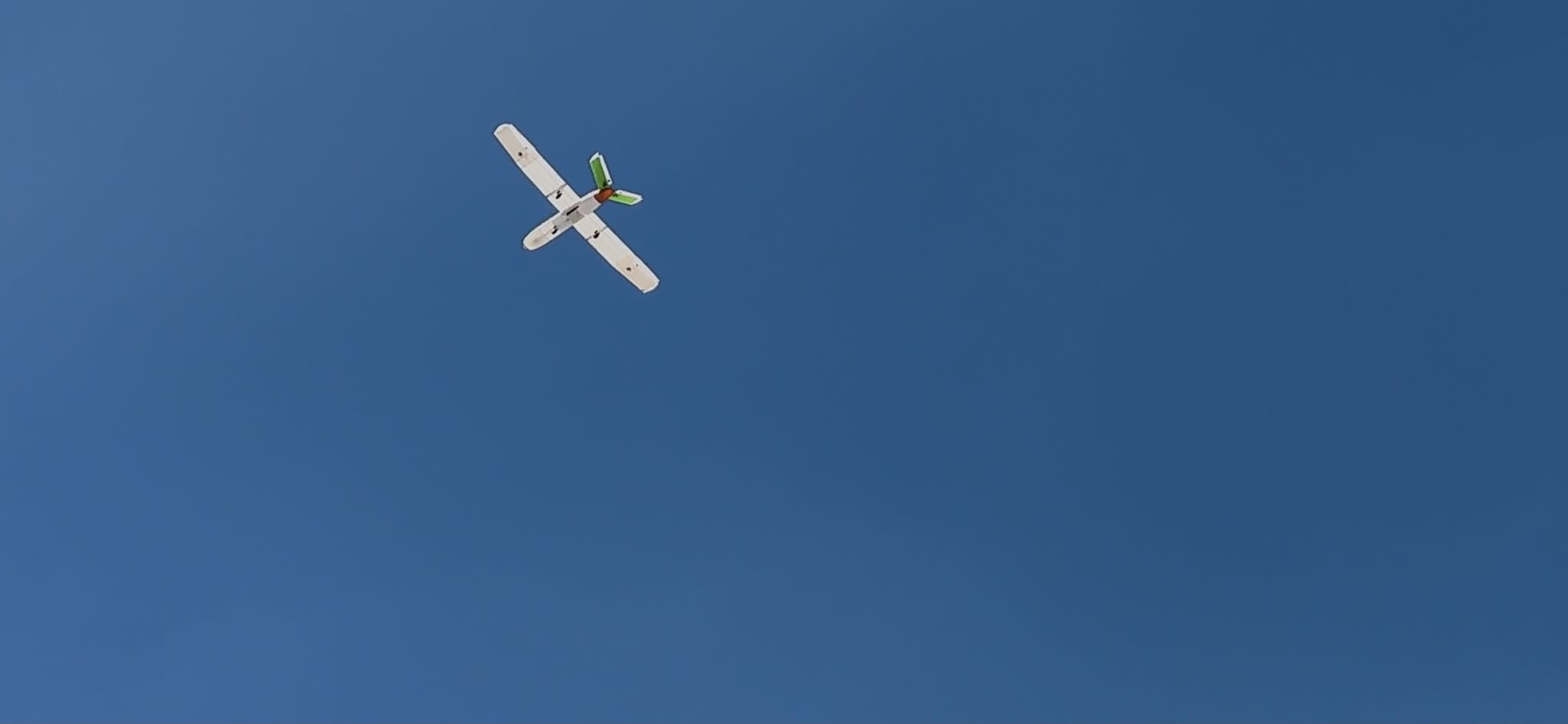
Our first generation autonomous unmanned aerial vehicle designed for SUAS competitions. Features advanced navigation and payload delivery systems.
View Details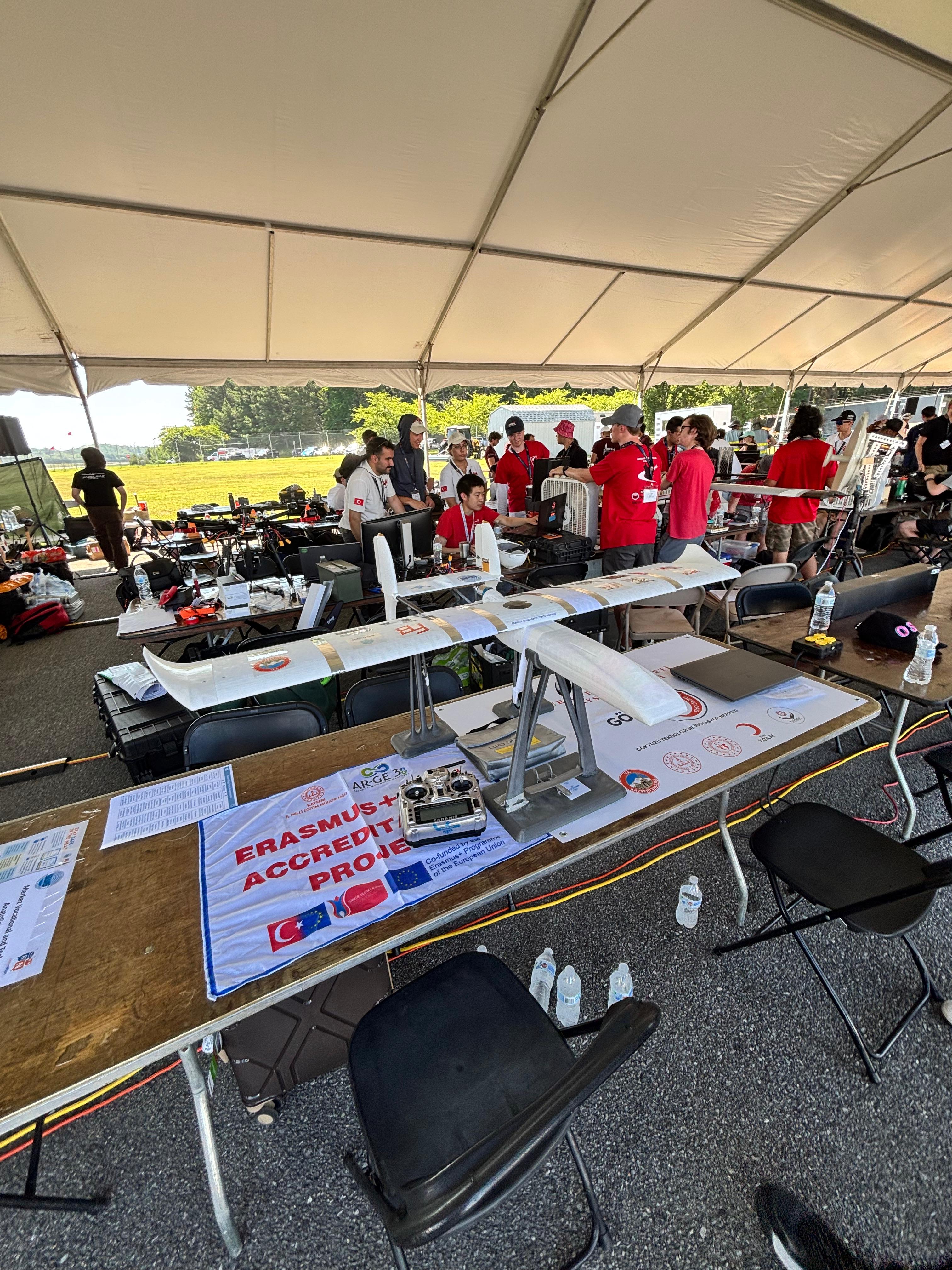
100.Yıl
100.Yıl
Aerodynamic Design: High-stability Clark-Y airfoil with a 58 g/dm m^2 wing loading. Features a 6 degree ground AoA for superior Short Take-Off and Landing (STOL) performance. Propulsion System: Mid-mounted brushless motor with a 4S Li-Po setup, optimized for Center of Gravity (CoG) balance and secondary airflow for the mission mechanism. Autonomous Navigation: Fully autonomous flight via Pixhawk Cube Orange+; integrated Raspberry Pi 4 for custom AI-based Identify Friend or Foe (IFF) protocols. Payload System: AI-triggered, modular defensive mechanism integrated into the landing gear, utilizing aerodynamic airflow for enhanced particle deployment range.
View Details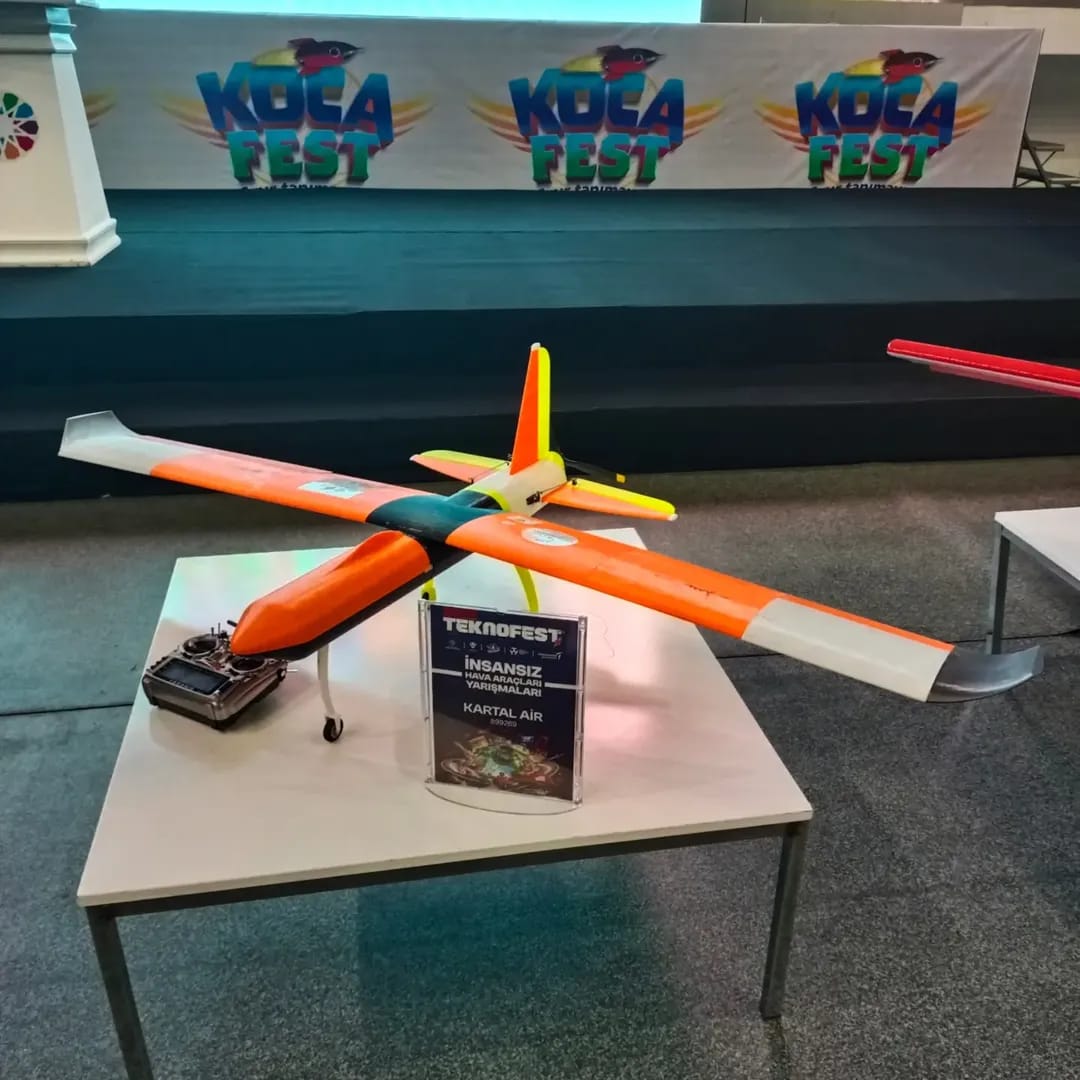
v6
v6
Aerodynamics: Optimized with 3D modeling and a Clark-Y airfoil for high lift and low-speed flight stability. Propulsion: Mid-mounted brushless motor powered by a 4S 2800 mAh Li-Po system for balanced efficiency. Navigation: Fully autonomous operations via Pixhawk Cube Orange+ and Raspberry Pi 4 for AI-driven target identification (IFF). Payload System: An AI-triggered, servo-controlled modular mechanism utilizing airflow-assisted ejection for precision delivery.
View Details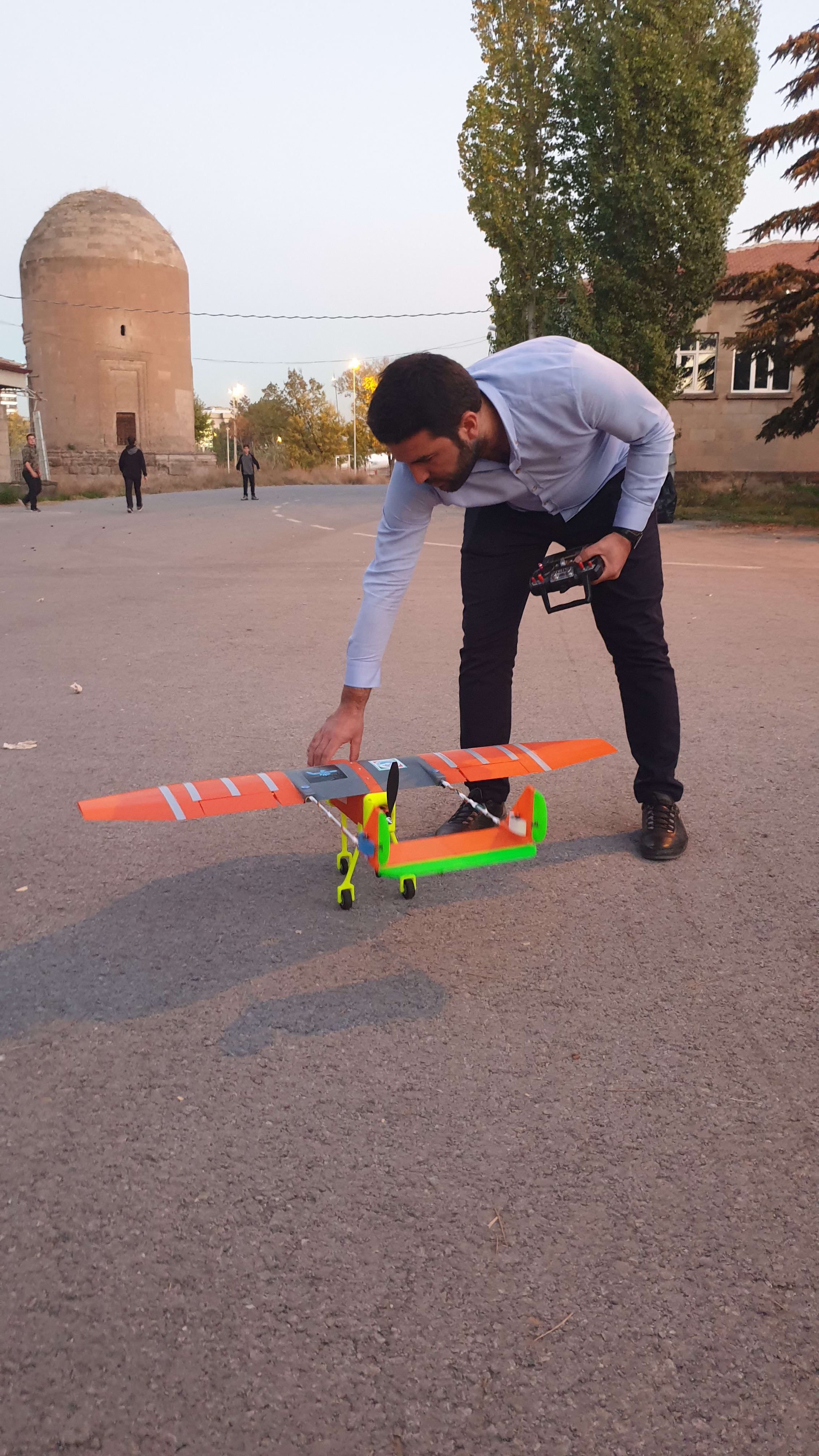
Gazi
Gazi
Aerodynamics: Stable high-wing configuration, 3-piece modular assembly, and drag-optimized geometry. Propulsion: Efficient, lightweight mid-mounted motor for enhanced protection and clean airflow. Navigation: Fully autonomous Pixhawk 2.4.8 control with multi-sensor fusion and directional stability. Payload: Internally integrated sequential release system and shock-absorbing landing gear.
View Details